ServicesReverse Osmosis
Reverse Osmosis in Celina
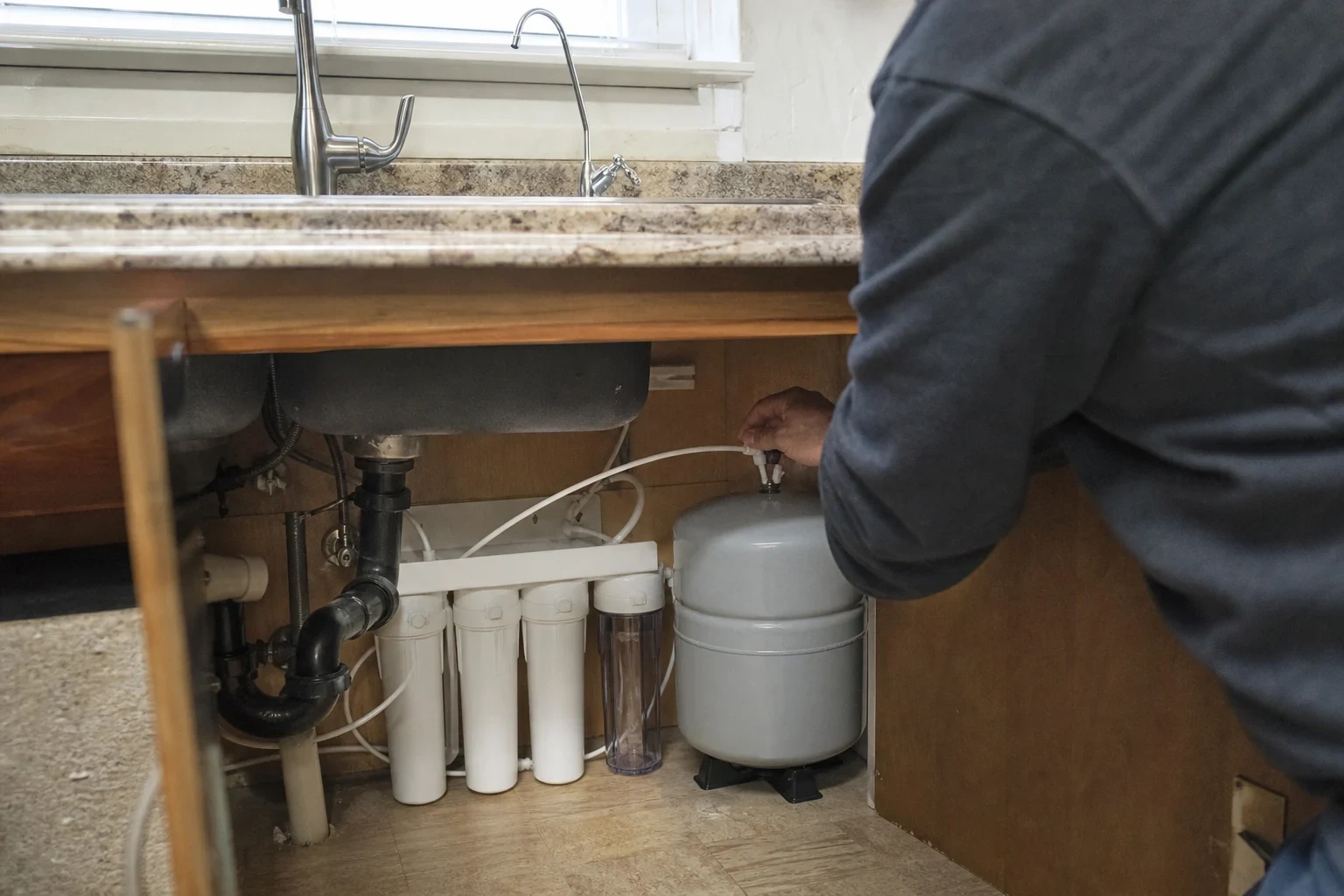
An under-sink reverse osmosis system gives your kitchen a dedicated tap for drinking and cooking water. We explain each part, from the membrane to the faucet finish, so you choose a setup that fits your cabinet, your counter and the way your home uses water.
What reverse osmosis does at your kitchen sink
Reverse osmosis pushes water through a semi-permeable membrane that holds back dissolved solids, many trace contaminants and the leftover taste of disinfectant. Before the water reaches that membrane, it passes through sediment and carbon prefilters. Afterward, a final carbon polishing filter cleans up the taste on its way to a separate faucet.
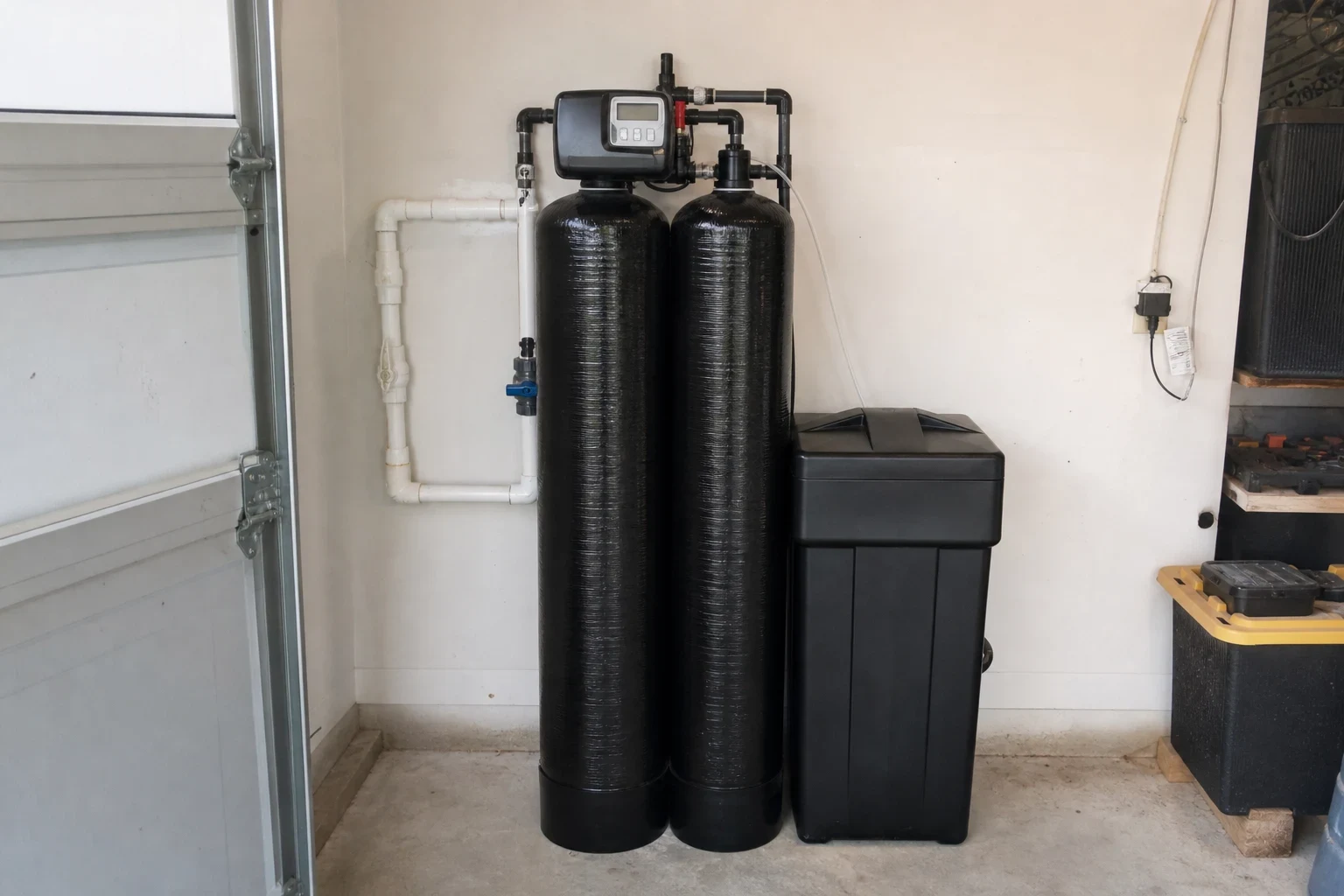
It is a point-of-use system. It treats the water you drink, cook with and pour into the coffee maker, not the water in your shower. If you want treated water at every tap, our Whole-Home Filtration page covers that. Many homes pair the two.
The parts are not all alike, and the differences matter more than the stage count on the box. We walk you through each choice and what it means for upkeep, so the system still makes sense a few years in.
The parts we install and how we choose them
Thin-film composite membrane
Most systems we fit use a thin-film composite membrane because it rejects more dissolved solids than older cellulose types. It does not tolerate chlorine, so the carbon stages ahead of it are there to protect it as much as to improve taste.
Carbon block prefilters
We favor carbon block over loose granular carbon because water cannot channel around it. If your utility uses chloramine, we may suggest a catalytic carbon cartridge, which handles it better than standard carbon.
Storage tank or tankless design
A traditional steel tank with an internal bladder holds a few gallons ready to pour and has a long track record. Tankless units save cabinet space and serve fresher water but need an outlet under the sink. We show you both against your actual cabinet.
Faucet in a finish that matches
The dedicated faucet comes in finishes like brushed nickel, chrome and matte black. We match it to your main faucet and drill cleanly through your counter or use an existing sprayer hole.
Optional remineralization stage
Some people find RO water tastes flat. A remineralization cartridge adds back a small amount of calcium and magnesium for a rounder taste. It is optional, and we tell you plainly whether it is worth it for you.
Refrigerator and ice maker line
We can run a food-grade line from the system to your refrigerator so the ice and door water match what comes from the faucet.
Signs a reverse osmosis system belongs in your kitchen
- You buy cases of bottled water
- If the household drinks from bottles because the tap tastes off, an RO faucet usually pays its way in convenience alone, and it means fewer plastic cases to haul in from the car.
- A chemical taste or smell at the tap
- That faint pool smell comes from disinfectant the utility adds on purpose. Carbon and RO stages take it out of the water you actually drink.
- Cloudy ice and spotted glassware
- Dissolved minerals show up in ice cubes and on glasses. RO water freezes clearer and leaves less residue in kettles and coffee makers.
- An older system that fills slowly
- If your current unit takes ages to fill a glass or the tank feels empty, the membrane or the tank bladder has likely worn out. We tell you honestly whether new parts will do or the whole unit should go.
How an installation runs
- 1
A conversation by phone
You tell us how your household uses water and what bothers you about it. We talk through tank versus tankless, faucet finishes and whether the refrigerator line makes sense, then give you a quote. Nothing is ordered until you have looked over the line items.
- 2
Checking the space under your sink
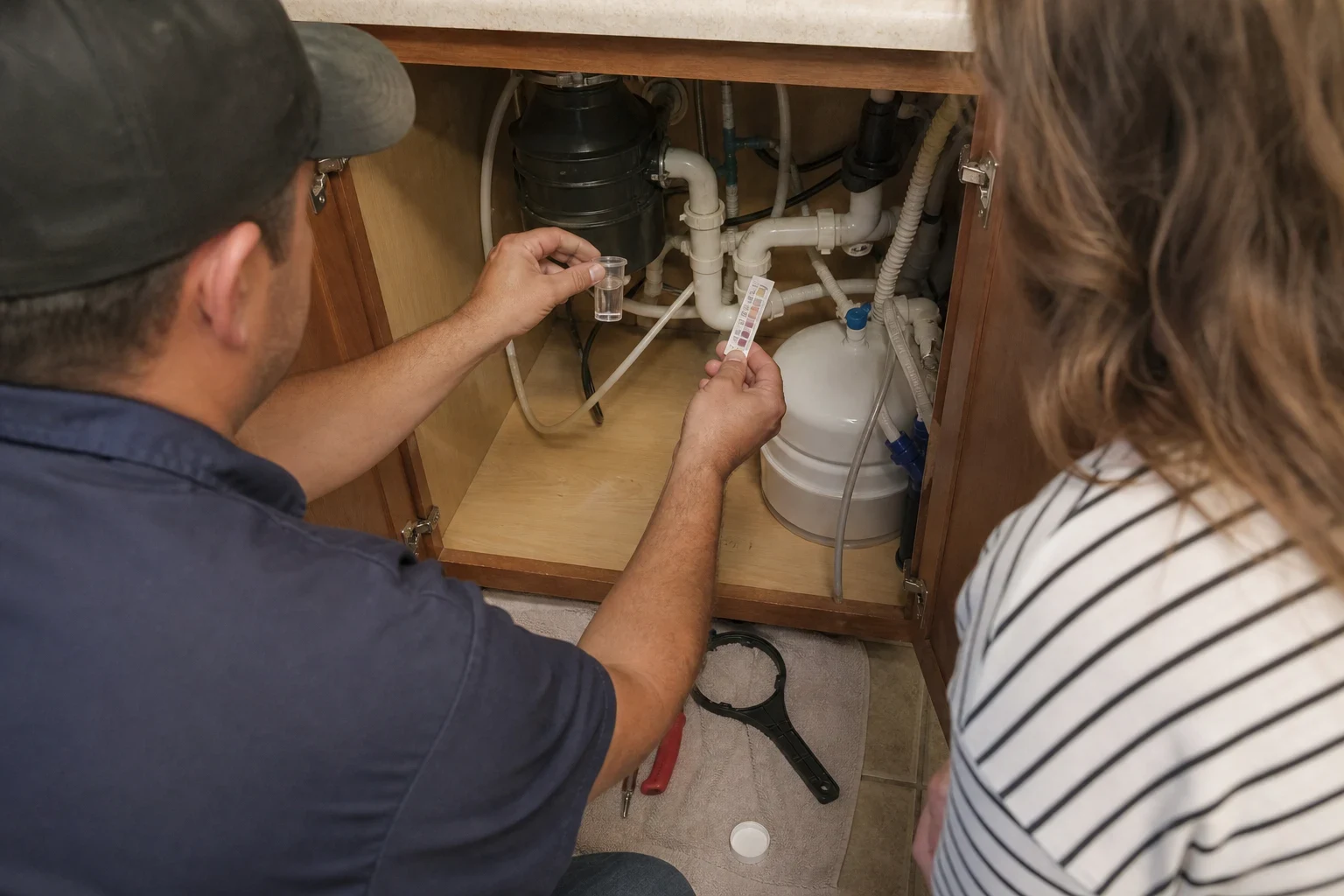
We look at cabinet depth, the drain line, the cold supply valve and whether there is an outlet nearby. That decides which design fits without crowding your garbage disposal or trash pull-out.
- 3
Installation day
The installation is handled by a subcontracted master-licensed plumber. A mat goes down in the cabinet first, then the unit is mounted, the drain saddle and faucet are connected, and every fitting is checked for leaks under pressure.
- 4
First flush and a walkthrough
New filters and membranes need a flush before you drink from them, so we start that and show you how the shutoff valve works. Then we go over which cartridge gets changed and roughly when.
What drives the cost of reverse osmosis
Reverse osmosis has no one set price, since the parts differ so widely. A small tank system with a chrome faucet is not the same job as a tankless unit feeding a refrigerator. Your quote is broken out by item so you can see each cost. Qualifying homes get standard professional installation included.
- Tank versus tankless
- A tankless unit costs more at the start and may need an outlet under the sink. A tank system is cheaper but takes up more of the cabinet.
- Extra stages
- Catalytic carbon, a remineralization cartridge or a permeate pump to reduce wastewater each add parts to the list.
- What your counter is made of
- Cutting a faucet hole in granite or quartz takes longer and more care than laminate or reusing a sprayer hole.
- How far the fridge is
- A fridge right beside the sink is an easy hookup. Running the line through cabinets or below the floor to a fridge on the far side of the kitchen takes more labor.
Questions people ask about reverse osmosis
- Does an RO system waste water?
- Some, by design. A steady rinse keeps the membrane from fouling, so a share of the incoming water flushes the rejected minerals to the drain. Current membranes, and a permeate pump if you add one, bring that share down considerably. Since the system feeds only one kitchen faucet, the volume is minor next to a load of laundry or a lawn watering cycle.
- How often do I change the filters?
- Expect to swap the prefilters and the final polishing filter roughly every year, more or less depending on how much you use. The membrane outlasts them, often by several years. We hand you a written schedule so you can see what comes due and when.
- Will RO strip out healthy minerals?
- Yes, most dissolved minerals come out with everything else. Food, not water, supplies most of the minerals people take in. If you prefer water with some mineral taste, a remineralization stage adds a little back.
- Do I need a softener along with RO?
- Not always. Hard water can shorten a membrane's life, so if your water is on the hard side, a softener may be worth considering. Our Water Softeners page explains when one helps and when you can skip it.
- What if something goes wrong after installation?
- Each install is backed by a 1-year workmanship warranty on installation-related defects. If a fitting we put in starts to drip, let us know and we will come back to repair it.
Choose the parts before you choose the system
Tell us about your kitchen and how you use water, and we will lay out the membrane, tank and faucet options that suit it. We work across Celina and nearby towns like Prosper and Little Elm.