ServicesWater Softeners
Water Softeners in Celina, Chosen Part by Part
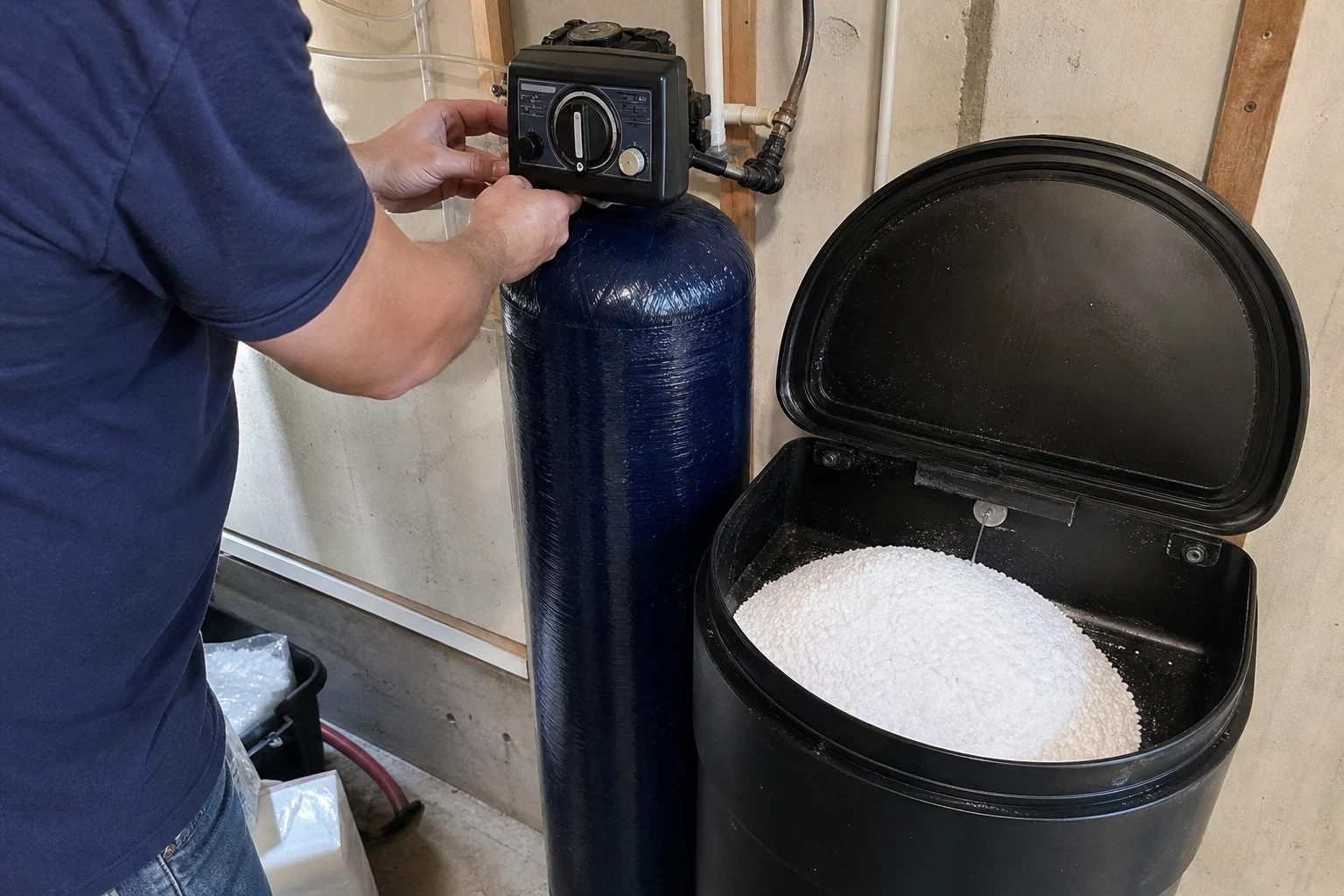
A softener is only as good as the resin inside it, the valve that runs it and the way it is plumbed into your home. We measure your hardness first, show you the options side by side and install a system sized to how your household uses water.
What a Softener Does, and When It Is the Right Choice
Hard water carries dissolved calcium and magnesium. Inside a softener, those minerals cling to a bed of resin beads and are traded for sodium or potassium, so the water leaving the tank no longer carries what causes the white crust on fixtures, the film on glass shower doors and the scale inside water heaters and dishwashers. With them gone, soap lathers properly, fixtures stay cleaner and appliances work less hard.
A softener is not a filter. It does nothing for chlorine taste, odor or sediment, so it pairs well with whole-home filtration when both are needed. We recommend one only when a hardness reading supports it, and a water test gives you that number before you commit to anything.
What Goes Into a Softener Installation
- 01
Resin chosen for your water
Standard 8% crosslink resin suits most homes on treated city water. A 10% crosslink resin holds up better against chlorine and usually lasts longer, at a higher cost. We explain which one fits your water and why.
- 02
Fiberglass-reinforced mineral tank
The resin sits in a polyethylene-lined tank wrapped in fiberglass. It will not rust, and it handles normal household pressure swings without fatigue.
- 03
Metered control valve
Our preferred valves count the gallons that pass through and start a regeneration only once the resin has done its share of work, instead of running on a calendar. A quiet week at home uses less salt and sends less water down the drain.
- 04
Brine tank and salt setup
The brine tank is placed where you can reach it for top-ups. We talk through salt types: sodium chloride pellets are economical, while potassium chloride costs more but adds no sodium.
- 05
Bypass valve and proper drain
Every system gets a bypass so water keeps flowing if the softener ever needs service. The drain line is run with an air gap so wastewater can never siphon back into the unit.
Questions about Water Softeners?
Call(972) 435-6562Signs Your Home Could Use a Softener
Crust on faucets and shower heads
White or chalky buildup that returns within days of cleaning is calcium carbonate. It also narrows shower head nozzles over time.
Spots that will not rinse off
Cloudy glassware out of the dishwasher and streaks on shower glass usually point to hard water rather than the detergent.
Soap that never quite lathers
Hard minerals bind with soap, so you use more shampoo and detergent and still feel a film on skin and towels.
A water heater that pops or rumbles
That noise is often scale on the bottom of the tank. Scale makes the burner or element work harder to heat the same water.
Short-lived appliances and fixtures
Ice makers, dishwashers and cartridge faucets that fail early often have mineral buildup behind the problem.
How a Softener Job Runs
- 1
Hardness reading and quote
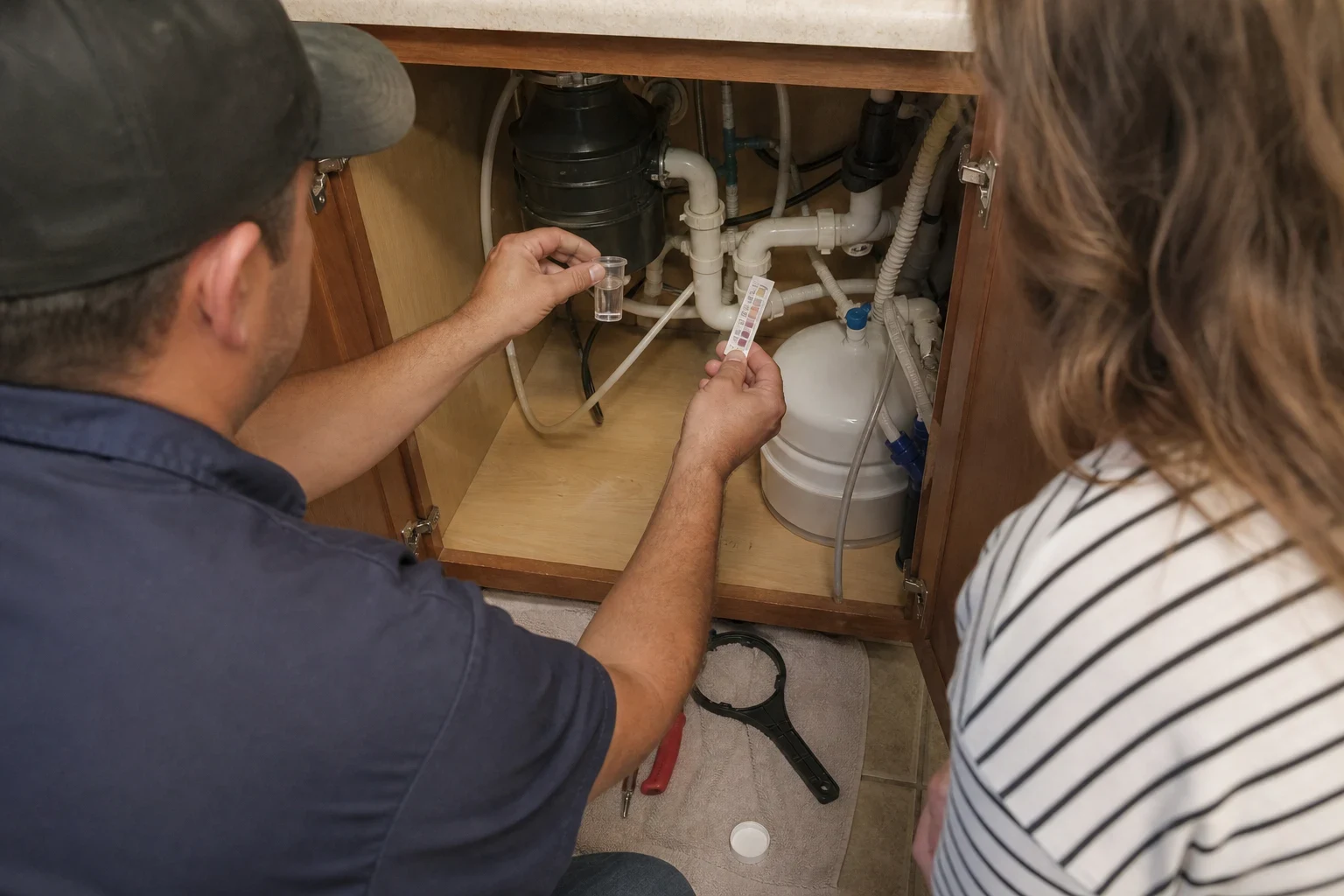
It starts with a phone call. We set up your water test, measure hardness and iron, and give you a written quote that lists the tank size, resin and valve we suggest.
- 2
Choosing the spot
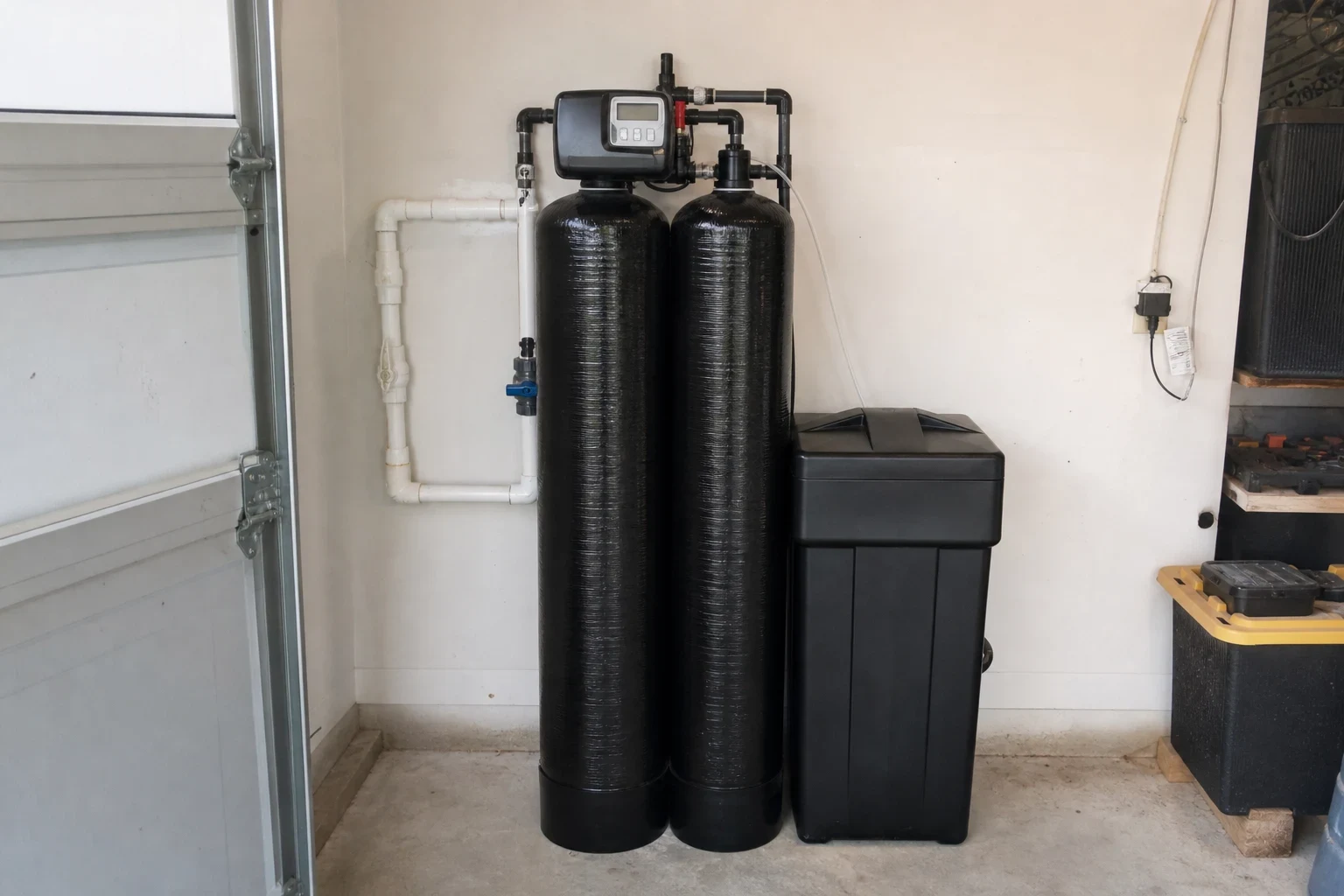
Many newer North Texas homes have a softener loop already stubbed out in the garage. If yours does not, we show you where the plumbing would run and what that adds before you decide.
- 3
Installation day
The plumbers on your job shut off the water, connect the loop and bypass, and run the drain line. Floors and garage surfaces are covered while they work.
- 4
Startup and walkthrough
We load the resin, fill the brine tank, program the valve for your household size and hardness, and run a first regeneration. Before we leave, you know how to add salt and how to use the bypass, and the work area is cleaned up.
What Drives the Cost of a Softener
A softener's price depends on how big the system is, how good its parts are and how much plumbing your home calls for. Qualifying homes get standard professional installation included. Each part appears on your quote, so the cost is easy to follow.
- Capacity in grains
- Harder water and a bigger household need more resin. Too large a system costs more than it should, and too small a one regenerates all the time.
- Quality of resin and valve
- Higher crosslink resin and a metered valve raise the upfront cost, but they usually use less salt and hold up longer.
- Plumbing already in place
- An existing softener loop makes the install straightforward. New lines, a drain or an outlet add time and materials.
- Adding filtration
- A carbon stage in front of the softener shields the resin from chlorine and improves taste. It raises the system cost but can help the resin last longer.
Softener Questions We Hear Often
Will softened water taste salty?
At ordinary hardness levels, the sodium a softener adds is slight, and few people notice it. Potassium chloride salt softens just as well with no added sodium. Another option is an under-sink reverse osmosis system for the water you drink and cook with.
Does a softener remove chlorine?
It does not. A softener handles hardness minerals and a bit of iron, nothing more. For chlorine taste and odor, whole-home filtration is the answer, and the two work well together.
How much upkeep does a softener take?
Mostly adding salt every month or two, based on your water use. Once in a while, check the brine tank for a hardened layer of salt, called a bridge, and break it up if you find one. Resin typically lasts many years.
Who installs it, and what protects the work?
Our installs are done by subcontracted master-licensed plumbers and carry a 1-year workmanship warranty on installation-related defects.
Is a salt-free conditioner an option?
A conditioner alters the minerals so they stick to surfaces less, but the hardness stays in the water. With mildly hard water, that can be enough. With higher readings, a salt-based softener does the job more dependably, and we will tell you plainly which direction your results point.
Start With Your Hardness Number
We will explain the resin, tank and salt options in plain terms and give you a written quote you can think over. Homeowners in Celina, Prosper and Little Elm can set up a water test on the same call.